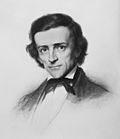
Ludwig Feuerbach
Allemagne · Sur la carte · Universitaires · 1804 - 1872 · 68 ans
Ludwig Andreas Feuerbach, né le 28 juillet 1804 à Landshut (électorat de Bavière), et mort le 13 septembre 1872 à Rechenberg, est un philosophe bavarois.
Texte issu de Wikipédia, CC BY-SA 4.0
Ludwig Feuerbach : environ 770 lectures par jour, en 76 langues.
Un jour typique, sur 30 jours jusqu'au 12 novembre 2026
Le jour médian de la période comptée : une semaine d'actualité ne peut donc pas le faire bouger. La courbe en dessous montre les 400 derniers jours, un point par jour.
Une erreur ?Une vie en dates
Autour de Ludwig

 Georg Wilhelm Friedrich Hegel A influencé Ludwig
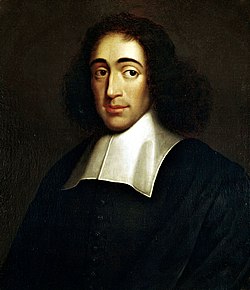 Baruch Spinoza A influencé Ludwig
 Friedrich Schleiermacher A influencé Ludwig
 Karl Marx Influence : Ludwig
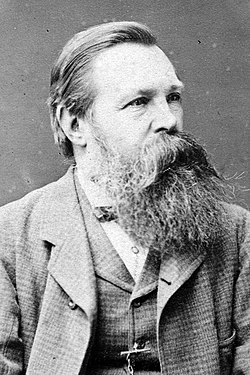 Friedrich Engels Influence : Ludwig
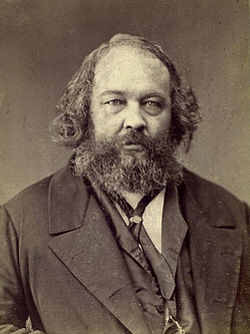 Mikhail Bakunin Influence : Ludwig
 Max Stirner Influence : Ludwig
 Alexander Herzen Influence : Ludwig
 Ernst Bloch Influence : Ludwig

 Ludwig Feuerbach
Conjoints
Frères et sœurs


Est-ce toute la famille ?
Seuls les proches qui ont un profil ici sont représentés : une famille peut donc être plus grande. Un lien peut aussi être erroné. Un mariage n'apparaît comme terminé que si sa fin est enregistrée : un mariage montré ici peut donc avoir pris fin.
Corriger cette familleMédias et musique
Photos 8


Citations 7
, Demonstrating is therefore only the means through which I strip my thought of the form of “mine-ness” so that the other person may recognize it as his own.
Every presentation of philosophy, whether oral or written, is to be taken and can only be taken in the sense of a means.
The history of philosophical system is the picture gallery of reason.
À propos de cette personne
Il est disciple, puis critique de Hegel et le chef de file (après Bruno Bauer) du courant matérialiste appelé hégélien de gauche auquel se sont joints Stirner, Marx, Engels et Bakounine. Sa critique de la religion et du courant philosophique de l'idéalisme allemand eut une influence considérable sur le mouvement du Vormärz.
Texte issu de Wikipédia, CC BY-SA 4.0