Johann Gottlieb Fichte
Allemagne · Sur la carte · Universitaires · 1762 - 1814 · 51 ans
Johann Gottlieb Fichte, né le 19 mai 1762 à Rammenau, en Saxe, et mort le 27 janvier 1814 à Berlin, en Prusse, est un philosophe allemand du XIXe siècle. Il fut un des fondateurs du mouvement philosophique connu sous le nom d'idéalisme allemand, qui tira son origine des écrits théoriques et éthiques d'Emmanuel Kant.
Texte issu de Wikipédia, CC BY-SA 4.0
Johann Gottlieb Fichte : environ 655 lectures par jour, en 84 langues.
Un jour typique, sur 30 jours jusqu'au 17 novembre 2026
Le jour médian de la période comptée : une semaine d'actualité ne peut donc pas le faire bouger. La courbe en dessous montre les 400 derniers jours, un point par jour.
Une erreur ?Une vie en dates
Autour de Johann

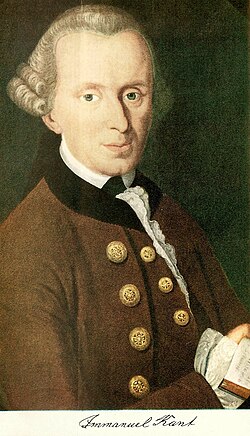 Immanuel Kant A enseigné à Johann, a influencé Johann
 Friedrich Wilhelm Joseph Schelling A eu pour maître Johann, influence : Johann
 Christian Lobeck A eu pour maître Johann
 Franz Volkmar Reinhard A enseigné à Johann
 Ernst Platner A enseigné à Johann
 Friedrich August Wilhelm Wenck A enseigné à Johann
 Jean-Jacques Rousseau A influencé Johann
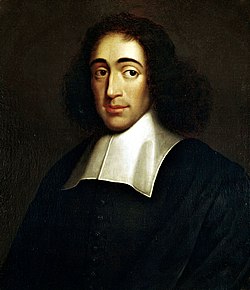 Baruch Spinoza A influencé Johann
 Karl Leonhard Reinhold A influencé Johann
 Salomon Maimon A influencé Johann
 Georg Wilhelm Friedrich Hegel Influence : Johann
 Max Stirner Influence : Johann
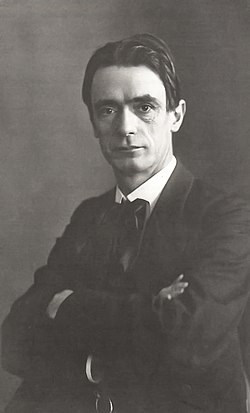 Rudolf Steiner Influence : Johann
 Gustav Landauer Influence : Johann
- Dieter Henrich Influence : Johann
 Nikolai Stankevich Influence : Johann
 François Laruelle Influence : Johann
 Jules Lequier Influence : Johann
Parents
 Johann Gottlieb Fichte
Conjoints

Est-ce toute la famille ?
Seuls les proches qui ont un profil ici sont représentés : une famille peut donc être plus grande. Un lien peut aussi être erroné. Un mariage n'apparaît comme terminé que si sa fin est enregistrée : un mariage montré ici peut donc avoir pris fin.
Corriger cette familleMédias et musique
Photos 8


Citations 4
, I posit myself as rational, that is, as free. In doing so I have the representation of freedom. In the same undivided act I posit other free beings.
What man is to be, he must become; and as he is to be a being for himself, must become through himself.
Whether there can be love without esteem?” Oh yes, thou dear, pure one! Love is of many kinds. Rousseau proves that by his reasoning and still better by his example.
À propos de cette personne
Émile Bréhier a défini la philosophie de Fichte dans son ensemble comme une « démonstration scientifique de la liberté ».
Texte issu de Wikipédia, CC BY-SA 4.0


