Yasunari Kawabata
Japon · Sur la carte · Écrivains · 1899 - 1972 · 72 ans
Yasunari Kawabata (川端 康成, Kawabata Yasunari), né le 11 juin 1899 à Osaka et mort le 16 avril 1972 à Zushi, est un écrivain japonais, prix Nobel de littérature en 1968.
Texte issu de Wikipédia, CC BY-SA 4.0
Yasunari Kawabata : environ 1 775 lectures par jour, en 111 langues.
Un jour typique, sur 30 jours jusqu'au 16 novembre 2026
Le jour médian de la période comptée : une semaine d'actualité ne peut donc pas le faire bouger. La courbe en dessous montre les 400 derniers jours, un point par jour.
Une erreur ?Une vie en dates
Autour de Yasunari

 Sō Yamamura Yasunari a écrit Repast et Dancing Girl
 Noboru Nakamura Réalisation : Twin Sisters of Kyoto (1963)
 Kōzaburō Yoshimura Réalisation : Reminiscence (1953)
 Katsumi Nishikawa Réalisation : Windy Street (1959)
 Ken Uehara Aussi dans Mr. Thank You (1936)
 Setsuko Hara Yasunari a écrit Repast (1951)
 Mikio Naruse Réalisation : Sound of the Mountain (1954)
 Teinosuke Kinugasa Réalisation : A Page of Madness (1926)
 Yoshishige Yoshida Réalisation : Woman of the Lake (1966)
 Haruko Sugimura Yasunari a écrit Repast (1951)
 Isao Kimura Yasunari a écrit Dancing Girl (1951)
 Mariko Okada Yasunari a écrit Dancing Girl (1951)
 Yasuzō Masumura Réalisation : Thousand Cranes (1969)
 Heinosuke Gosho Réalisation : The Dancing Girl of Izu (1933)
 Kaoru Yachigusa Aussi dans Snow Country (1957)
 Masahiro Shinoda Réalisation : With Beauty and Sorrow (1965)
 Shirō Toyoda Réalisation : Snow Country (1957)
 Hiroshi Shimizu Réalisation : Mr. Thank You (1936)
 Mariko Kaga Aussi dans Snow Country (1965)
 Chieko Naniwa Aussi dans Twin Sisters of Kyoto et Snow Country
 Haruo Tanaka Aussi dans Snow Country et Twin Sisters of Kyoto
 Sanezumi Fujimoto Production : Sound of the Mountain (1954)
 Hideo Ōba Réalisation : Snow Country (1965)
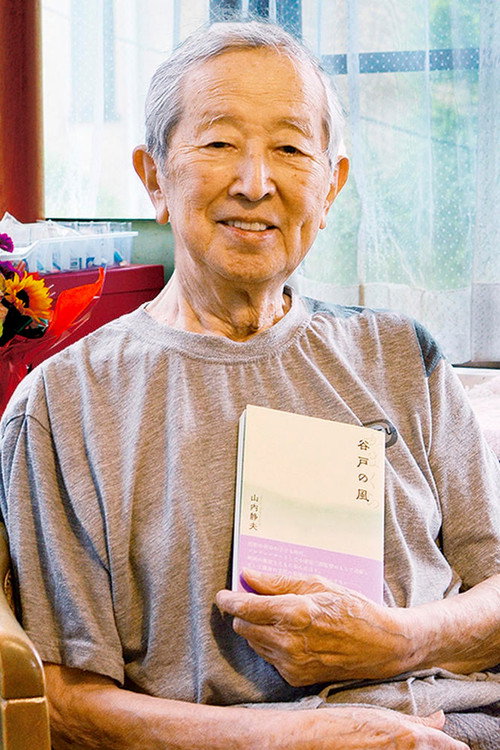 Shizuo Yamanouchi Production : Snow Country (1965)
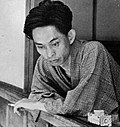 Yasunari Kawabata
Conjoints

Est-ce toute la famille ?
Seuls les proches qui ont un profil ici sont représentés : une famille peut donc être plus grande. Un lien peut aussi être erroné. Un mariage n'apparaît comme terminé que si sa fin est enregistrée : un mariage montré ici peut donc avoir pris fin.
Corriger cette familleMédias et musique
Photos 8


Citations 4
, I have an essay with the title "Eyes in their Last Extremity". The title comes from the suicide note of the short-story writer Akutagawa Ryunosuke...
The "secret" of their being up in the tree had continued for almost two years now. Where the thick trunk branched out near the top, the two could sit comfortably.
From the way of Go, the beauty of Japan and the Orient had fled. Everything had become science and regulation.
Distinctions
À propos de cette personne
Considéré comme un écrivain majeur du XXe siècle et obsédé par la quête du beau, la solitude et la mort, il a écrit en particulier des récits très courts, d'un dépouillement stylistique extrême, regroupés plus tard en recueils, mais ses œuvres les plus connues internationalement sont ses romans comme Pays de neige (1935-1947), Le Grondement de la montagne (1954), Les Belles Endormies (1960-1961) ou Kyôto (1962).
Texte issu de Wikipédia, CC BY-SA 4.0

