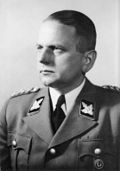
Max Horkheimer
Allemagne · Sur la carte · Universitaires · 1895 - 1973 · 78 ans
Max Horkheimer (né le 14 février 1895 et mort le 7 juillet 1973) est un philosophe et un sociologue allemand, connu pour être le directeur de l'Institut de recherche sociale (Institut für Sozialforschung), à l'origine de la célèbre École de Francfort de 1930 à 1969, et un des fondateurs de la théorie critique (Kritische Theorie).
Texte issu de Wikipédia, CC BY-SA 4.0
Max Horkheimer : environ 449 lectures par jour, en 56 langues.
Un jour typique, sur 30 jours jusqu'au 10 novembre 2026
Le jour médian de la période comptée : une semaine d'actualité ne peut donc pas le faire bouger. La courbe en dessous montre les 400 derniers jours, un point par jour.
Une erreur ?Une vie en dates
Autour de Max


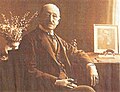
 Max Horkheimer
Est-ce toute la famille ?
Seuls les proches qui ont un profil ici sont représentés : une famille peut donc être plus grande. Un lien peut aussi être erroné.
Corriger cette familleMédias et musique
Photos 8


Citations 4
, Whoever desires to live among men has to obey their laws - this is what the secular morality of Western civilization comes down to.
Calvin’s theocentric irrationalism eventually revealed itself as the cunning to technocratic reason which had to shape its human material.
Although the formulations of science now offer the most advanced knowledge of nature, men continue to use obsolete forms of thought long discarded by scientific theory.