Maurits Cornelis Escher
Pays-Bas · Sur la carte · Artistes · 1898 - 1972 · 73 ans
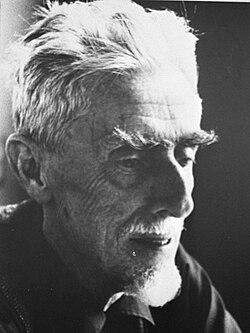
Maurits Cornelis Escher, né le 17 juin 1898 à Leeuwarden (Frise) et mort le 27 mars 1972 à Laren (Hollande-Septentrionale), plus couramment nommé M. C. Escher, est un artiste néerlandais, connu pour ses gravures sur bois, manières noires et lithographies souvent inspirées des mathématiques et des motifs de l'art islamique.
Texte issu de Wikipédia, CC BY-SA 4.0
Maurits Cornelis Escher : environ 1 619 lectures par jour, en 74 langues.
Un jour typique, sur 30 jours jusqu'au 9 novembre 2026
Le jour médian de la période comptée : une semaine d'actualité ne peut donc pas le faire bouger. La courbe en dessous montre les 400 derniers jours, un point par jour.
Une erreur ?Une vie en dates
Autour de Maurits




Parents

 Maurits Cornelis Escher
Conjoints

Est-ce toute la famille ?
Seuls les proches qui ont un profil ici sont représentés : une famille peut donc être plus grande. Un lien peut aussi être erroné. Un mariage n'apparaît comme terminé que si sa fin est enregistrée : un mariage montré ici peut donc avoir pris fin.
Corriger cette familleMédias et musique
Photos 8


Citations 4
, As long as there have been men.. ..upon this globe.. ..we have held firmly to the notion of.. ..all of which must continue to be everlasting in time and infinite in space.
In mathematical quarters, the regular division of the plane has been considered theoretically.. .Does this mean that it is an exclusively mathematical question?
The result of the struggle between the thought and the ability to express it, between dream and reality, is seldom more than a compromise or an approximation.
Distinctions
À propos de cette personne
Il a réalisé 448 estampes, et plus de 2 000 dessins et esquisses, ainsi que des tapisseries, des timbres et des œuvres murales. Ses œuvres les plus connues représentent des constructions impossibles, des explorations de l'infini, des pavages et des combinaisons de motifs en deux ou trois dimensions qui se transforment graduellement en des formes totalement différentes, défiant les modes habituels de représentation du spectateur. L'œuvre de M. C. Escher a séduit de nombreux mathématiciens à la communauté desquels il se défendait d'appartenir.
Texte issu de Wikipédia, CC BY-SA 4.0


