John Stuart Mill
Royaume-Uni · Sur la carte · Universitaires · 1806 - 1873 · 66 ans
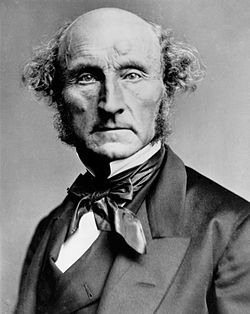
John Stuart Mill, né le 20 mai 1806 à Londres et mort le 8 mai 1873 à Avignon, est un philosophe, logicien et économiste britannique. Penseur libéral parmi les plus influents du XIXe siècle, il est un partisan de l'utilitarisme, une théorie éthique conçue par Jeremy Bentham.
Texte issu de Wikipédia, CC BY-SA 4.0
John Stuart Mill : environ 1 846 lectures par jour, en 95 langues.
Un jour typique, sur 30 jours jusqu'au 9 novembre 2026
Le jour médian de la période comptée : une semaine d'actualité ne peut donc pas le faire bouger. La courbe en dessous montre les 400 derniers jours, un point par jour.
Une erreur ?Une vie en dates
Autour de John
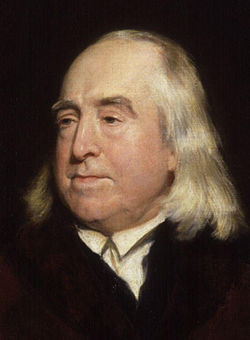 Jeremy Bentham A enseigné à John
 Bertrand Russell Influence : John
 Paul Dirac Influence : John
 Paul Krugman Influence : John
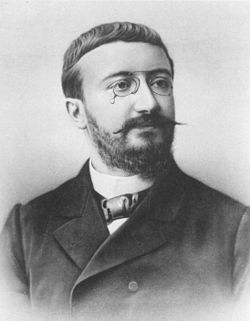 Alfred Binet Influence : John
 Wilhelm Dilthey Influence : John
 Martha Nussbaum Influence : John
 Henry Hyndman Influence : John
 Giulio Giorello Influence : John
 Søren Jaabæk Influence : John

 John Stuart Mill
Conjoints

Est-ce toute la famille ?
Seuls les proches qui ont un profil ici sont représentés : une famille peut donc être plus grande. Un lien peut aussi être erroné. Un mariage n'apparaît comme terminé que si sa fin est enregistrée : un mariage montré ici peut donc avoir pris fin.
Corriger cette familleMédias et musique
Photos 8


Citations 4
, The application of algebra to geometry...
That power should be exercised over any portion of mankind without any obligation of consulting them, is only tolerable while they are in an infantine, or a semi-barbarous state.
How can great minds be produced in a country where the test of a great mind is agreeing in the opinions of small minds?
Distinctions
À propos de cette personne
En économie, il est l'un des derniers représentants de l'école classique. Précurseur du féminisme, Mill propose en outre un système de logique qui opère la transition entre l'empirisme du XVIIIe siècle et la logique contemporaine. Il est enfin l'auteur du premier grand traité sur la démocratie représentative, Considérations sur le gouvernement représentatif (1861). À la fin de sa vie, John Stuart Mill exprime plus d'intérêt pour les théories socialistes.
Texte issu de Wikipédia, CC BY-SA 4.0


