John Steinbeck
États-Unis · Sur la carte · Écrivains · 1902 - 1968 · 66 ans
John Steinbeck (à prononcer : /d͡ʒɑn ˈstaɪnbɛk/), né le 27 février 1902 à Salinas (Californie) et mort le 20 décembre 1968 à New York, est un écrivain et journaliste américain.
Texte issu de Wikipédia, CC BY-SA 4.0
John Steinbeck : environ 14 009 lectures par jour, en 109 langues.
Un jour typique, sur 30 jours jusqu'au 9 novembre 2026
Le jour médian de la période comptée : une semaine d'actualité ne peut donc pas le faire bouger. La courbe en dessous montre les 400 derniers jours, un point par jour.
Une erreur ?Une vie en dates
Autour de John

 Elia Kazan Réalisation : Viva Zapata! et East of Eden
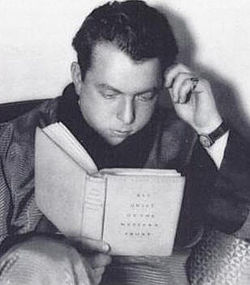 Lewis Milestone Réalisation : Of Mice and Men et The Red Pony
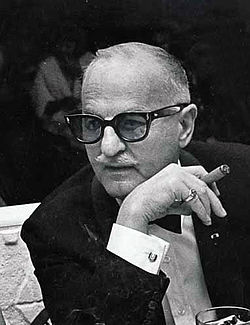 Darryl F. Zanuck Production : Lifeboat et Viva Zapata!
 Richard Garrick Aussi dans O. Henry's Full House et Viva Zapata!
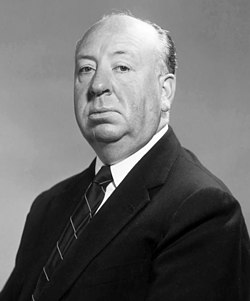 Alfred Hitchcock Réalisation : Lifeboat (1944)
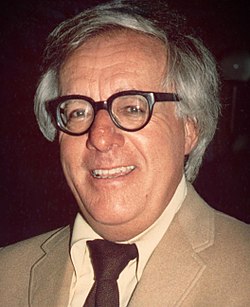 Ray Bradbury Influence : John
 John Grisham Influence : John
 Pedro Armendáriz John a écrit La perla (1948)
 Emilio Fernández Réalisation : The Pearl (1947)
 Jean Peters Aussi dans O. Henry's Full House et Viva Zapata!
- Ted Kotcheff Réalisation : Of Mice and Men (1968)
 Nunnally Johnson Production : The Moon Is Down (1943)
 Irving Pichel Réalisation : The Moon Is Down (1943)
 Charles Brackett Production : The Wayward Bus (1957)
 Dorris Bowdon John a écrit The Grapes of Wrath (1940)
- Victor Vicas Réalisation : The Wayward Bus (1957)
 María Elena Marqués John a écrit La perla (1948)
 Metin Erksan Réalisation : Mahalle Arkadaşları (1961)
 Alexandr Hackenschmied Réalisation : The Forgotten Village (1941)
 William Goetz Production : Lifeboat (1944)
 Kenneth Macgowan Production : Lifeboat (1944)
 David Susskind Production : Of Mice and Men (1968)
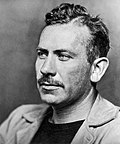 John Steinbeck
Conjoints

Enfants

Est-ce toute la famille ?
Seuls les proches qui ont un profil ici sont représentés : une famille peut donc être plus grande. Un lien peut aussi être erroné.
Corriger cette familleMédias et musique
Photos 8


Citations 4
, Boileau said that Kings, Gods and Heroes only were fit subjects for literature. The writer can only write about what he admires.
I must go over into the interior valleys. ... There are five thousand families starving to death over there, not just hungry but actually starving.
The discipline of the written word punishes both stupidity and dishonesty.
Distinctions
À propos de cette personne
Il remporte le prix Nobel de littérature en 1962 « pour ses écrits réalistes et imaginatifs, alliant à la fois un humour sympathique et une perception sociale aiguë ». Il est considéré comme « un géant des lettres américaines » et plusieurs de ses œuvres sont des classiques de la littérature occidentale. Au cours de sa carrière, il publie vingt-sept livres, dont seize romans, six livres non romanesques et deux recueils de nouvelles. Il est largement connu pour les romans comiques Tortilla Flat (1935) et Rue de la sardine (1945), la saga familiale À l'est d'Éden (1952), ainsi que pour les courts romans Des souris et des hommes (1937) et Le Poney rouge (1937). Les Raisins de la colère (1939), lauréat du prix Pulitzer, est considéré comme son chef-d'œuvre et fait partie du canon occidental. Au cours des 75 années qui ont suivi sa publication, il s'est vendu à plus de 14 millions d'exemplaires. La plupart des œuvres de Steinbeck se déroulent au cœur de la Californie, en particulier dans la vallée de Salinas et les chaînes côtières californiennes. Ses œuvres ont fréquemment exploré les thèmes du destin et de l'injustice, en particulier chez les travailleurs et fermiers opprimés. La période de ses romans étaient majoritairement située pendant la Grande Dépression.
Texte issu de Wikipédia, CC BY-SA 4.0

