Aller au contenu
227 683 profils classés

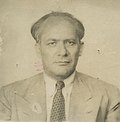
Howard Gardner

Howard Earl Gardner, né le 11 juillet 1943 à Scranton (Pennsylvanie), est un psychologue du développement américain, professeur de sciences de l’éducation à l'université Harvard, et professeur de neurosciences à l’Université de Boston.

Texte issu de Wikipédia, CC BY-SA 4.0

Howard Gardner : environ 330 lectures par jour, en 47 langues.

Un jour typique, sur 30 jours jusqu'au 9 novembre 2026

Le jour médian de la période comptée : une semaine d'actualité ne peut donc pas le faire bouger. La courbe en dessous montre les 108 derniers jours, un point par jour.

Une erreur ?
Comparer Revendiquer

Une vie en dates

2015“Anything that is worth teaching can be presented in many different ways. These multiple ways can make use of our multiple intelligences.”Ses propres motsHoward Gardner, cited in: Laurie Myers, ‎Joseph Will (2015), Whole Family Learning: Experiences Living and Teaching In China. p. 16

2014“Stories are the single most powerful weapon in a leader's arsenal.”Ses propres motsHoward Gardner, cited in: Richard L. Daft (2014), The Leadership Experience, p. 273

2011“Both science and history are moving targets.”Ses propres motsHoward Gardner (2011), Truth, Beauty, and Goodness Reframed: Educating for the Virtues in the Age of Truthiness and Twitter, p. 26-27

Prix Princesse des Asturies en sciences socialesDistinction2007“If you are not prepared to resign or be fired for what you believe in, then you are not a worker, let alone a professional. You are a slave.”Ses propres motsmars 2007Howard Gardner, "The Ethical Mind," in: Harvard Business Review, mars 2007.

2000Bourse GuggenheimDistinction1998“I myself do not condone investigations of racial differences in intelligence, because I think that the results of these studies are likely to be incendiary.”Ses propres motsjuillet 1998The Ethical Responsibilities of Professionals, juillet 1998 (Updated février 2001). Good Work Project Report Series, Number 2.

1990Prix GrawemeyerDistinction1983“I want my children to understand the world, but not just because the world is fascinating and the human mind is curious.”Ses propres motsHoward Gardner (1983), "Multiple approaches to understanding," in: Charles M. Reigeluth (ed.) Instructional-design Theories and Models: A

1981Prix MacArthurDistinction1943Naissance11 juillet 1943

Autour d’Howard

Médias et musique

Photos 8

Citations 3

,
Howard Gardner
,
3 déclarations, les plus récentes d'abord
  1. Even if at the end of the day, the bad guys turn out to be more correct scientifically than I am, life is short, and we have to make choices about how we spend our time.

    2009 · "Intelligence: It's not just IQ". Lecture at Rockefeller University, New York, 2009. (At 45:11-31.), Ses propres mots

  2. There is very little dispute about the principal constituent elements of music, though experts will differ on the precise definitions of each aspect.

    p.104, Ses propres mots

  3. An a priori decision to eliminate spiritual intelligence from consideration is no more justifiable than a decision to admit it by fiat or on faith.

    p. 51, Ses propres mots

Wikiquote, CC BY-SA 4.0

Distinctions

Prix Princesse des Asturies en sciences sociales2011
Bourse Guggenheim2000
Prix Grawemeyer1990
Prix MacArthur1981

À propos de cette personne

Auteur de la théorie des intelligences multiples, ses travaux se répercutent principalement dans le milieu scolaire. Howard Gardner est surtout connu pour ses livres Frames of Mind : the theory of multiple intelligences et The Mind’s New Science.

Texte issu de Wikipédia, CC BY-SA 4.0

Pays
États-Unis
Catégorie
Universitaires
Type
Universitaire
Statut
En vie
Dates
Naissance en 1943 · 83 ans

Sur le web