Aller au contenu
228 129 profils classés

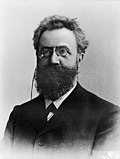
Hermann Ebbinghaus

Hermann Ebbinghaus est un philosophe allemand (né le 24 janvier 1850 à Barmen et mort le 26 février 1909 à Halle, d'une pneumonie) souvent considéré comme le père de la psychologie expérimentale de l'apprentissage.

Texte issu de Wikipédia, CC BY-SA 4.0

Hermann Ebbinghaus : environ 195 lectures par jour, en 45 langues.

Un jour typique, sur 30 jours jusqu'au 10 novembre 2026

Le jour médian de la période comptée : une semaine d'actualité ne peut donc pas le faire bouger. La courbe en dessous montre les 116 derniers jours, un point par jour.

Une erreur ?
Comparer

Une vie en dates

1909Décès26 février 19091885“A poem is learned by heart and then not again repeated.”Ses propres motsp. 8

“The constant flux and caprice of mental events do not admit of the establishment of stable experimental conditions.”Ses propres motsp. 19

“The relation of repetitions for learning and for repeating English stanzas needs no amplification.”Ses propres motsp. 85

“The schoolboy doesn't force himself to learn his vocabularies and rules altogether at night, but knows that he must impress them again in the morning.”Ses propres motsp. 89

“Mental events, it is said, are not passive happenings but the acts of a subject.”Ses propres motsp. 91

“No matter how thoroughly a person may have learned the Greek alphabet, he will never be in a condition to repeat it backwards without further training.”Ses propres motsp. 113

1850Naissance24 janvier 1850

Autour d’Hermann

Liens proches

Médias et musique

Photos 8

Citations 4
,
Hermann Ebbinghaus
,
4 déclarations, les plus récentes d'abord
  1. What is true is alas not new, the new not true.

    Hermann Ebbinghaus cited in: Sills (1968), International Encyclopedia of the Social Sciences, p. 326, Ses propres mots

  2. Language is a system of conventional signs that can be voluntarily produced at any time.

    Hermann Ebbinghaus, quoted in: Geza Revesz, The Origins and Prehistory of Language, London 1956. footnote p. 126, Ses propres mots

  3. Psychology has a long past, yet its real history is short.

    p. 3: Partly cited in: Edwin Boring (1929) A History of Experimental Psychology p. ix, Ses propres mots

Wikiquote, CC BY-SA 4.0

À propos de cette personne

Il appliqua les méthodes expérimentales aux autres domaines que ceux de la sensation, et notamment à ceux de la mémoire et de l'apprentissage (Sur la mémoire 1885). Il est associé au courant psychologique de l'associationnisme qui examine « comment les faits ou les idées peuvent être associés dans la pensée les uns aux autres, et aboutir à une forme d’apprentissage ».

Texte issu de Wikipédia, CC BY-SA 4.0

Pays
Allemagne
Catégorie
Universitaires
Type
Universitaire
Statut
Décédé(e)
Dates
1850 - 1909 · 59 ans