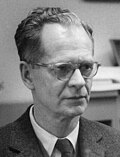
Edward Saïd
États-Unis · Sur la carte · Universitaires · 1935 - 2003 · 67 ans
Edward Wadie Saïd (en arabe : إدوارد وديع سعيد, né à Jérusalem le 1er novembre 1935 et mort à New York le 25 septembre 2003) est un universitaire, théoricien littéraire et critique palestino-américain.
Texte issu de Wikipédia, CC BY-SA 4.0
Edward Saïd : environ 1 449 lectures par jour, en 76 langues.
Un jour typique, sur 30 jours jusqu'au 9 novembre 2026
Le jour médian de la période comptée : une semaine d'actualité ne peut donc pas le faire bouger. La courbe en dessous montre les 400 derniers jours, un point par jour.
Une erreur ?Une vie en dates
Autour d’Edward


 Edward Saïd
Conjoints

Enfants
Frères et sœurs

Est-ce toute la famille ?
Seuls les proches qui ont un profil ici sont représentés : une famille peut donc être plus grande. Un lien peut aussi être erroné.
Corriger cette familleMédias et musique
Photos 9




Citations 4
, The central fact for me is, I think, that the [role of the] intellectual ...
[An elaborated culture has a] density, complexity, and historical-semantic value that is so strong as to make politics possible...
Ideas, cultures, and histories cannot seriously be understood or studied without their force, or more precisely their configurations of power, also being studied.
Distinctions
À propos de cette personne
Il enseigne, de 1963 jusqu'à sa mort en 2003, la littérature anglaise et la littérature comparée à l'université Columbia de New York. Il est l'auteur de nombreux livres de critique littéraire et musicale, il écrit aussi beaucoup sur le conflit israélo-palestinien et sur le Moyen-Orient. Robert Fisk dit de lui qu'il est la « voix politique la plus puissante [most powerful political voice] » pour les Palestiniens. Son ouvrage le plus célèbre est L'Orientalisme. L'Orient créé par l'Occident (Orientalism), publié en 1978 et traduit en français aux Éditions du Seuil en 1980. L'ouvrage a un retentissement international et est traduit en trente-six langues ; il est considéré comme un des textes fondateurs des études postcoloniales.
Texte issu de Wikipédia, CC BY-SA 4.0