Charlie Parker
États-Unis · Sur la carte · Musiciens · 1920 - 1955 · 34 ans
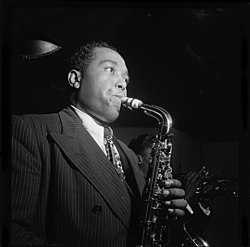
Charlie Parker (Charles Christopher Parker, Jr.) surnommé Bird (l'oiseau) ou Yardbird, né le 29 août 1920 à Kansas City et mort le 12 mars 1955 à New York, est un saxophoniste alto emblématique du jazz américain. Il est l'un des fondateurs du style bebop.
Texte issu de Wikipédia, CC BY-SA 4.0
Charlie Parker : environ 1 494 lectures par jour, en 70 langues.
Un jour typique, sur 30 jours jusqu'au 15 novembre 2026
Le jour médian de la période comptée : une semaine d'actualité ne peut donc pas le faire bouger. La courbe en dessous montre les 400 derniers jours, un point par jour.
Une erreur ?Une vie en dates
 Charlie ParkerAlbum1953
 Bird - Diz - Bud - MaxAlbum1939“I realized by using the high notes of the chords as a melodic line, and by the right harmonic progression, I could play what I heard inside me. That's when I was born.”Ses propres motsc. 1939 quoted in Masters of Jazz1920Naissance29 août 1920
Autour de Charlie
 Frank Sinatra Duos : Almost Like Being in Love (1947)
 Howard McGhee Groupe : Howard McGhee Quintet
 Dizzy Gillespie Duos : Bird and Diz et Shaw 'Nuff
 Sonny Rollins Influence : Charlie
 Norman Granz Production : Bird and Diz et Big Band
- Buster Smith A influencé Charlie
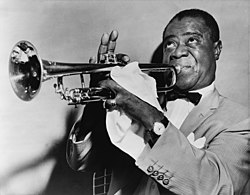 Louis Armstrong Duos : The Gypsy (1945)
 Billie Holiday Duos : Lover Man (1941)
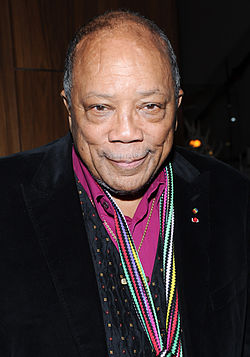 Quincy Jones Duos : The Gypsy (1945)
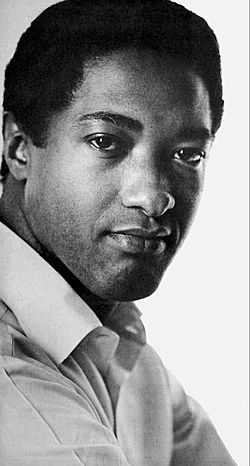 Sam Cooke Duos : The Gypsy (1945)
 Chet Baker Duos : Almost Like Being in Love (1947)
 Dinah Shore Duos : The Gypsy (1945)
 Lester Young Duos : Almost Like Being in Love (1947)
 Ben Webster Duos : Almost Like Being in Love (1947)
 George Shearing Duos : If I Should Lose You (1936)
 Red Garland Duos : Almost Like Being in Love (1947)
 Chris Connor Duos : Almost Like Being in Love (1947)
 Martial Solal Duos : Almost Like Being in Love (1947)
- Lennie Niehaus Influence : Charlie
 Jon Hendricks Duos : Almost Like Being in Love (1947)
 Jutta Hipp Duos : Almost Like Being in Love (1947)
 Charles McPherson Influence : Charlie
 Ernie Henry Influence : Charlie
 Dean Benedetti Influence : Charlie
 Charlie Parker
Conjoints
Est-ce toute la famille ?
Seuls les proches qui ont un profil ici sont représentés : une famille peut donc être plus grande. Un lien peut aussi être erroné. Un mariage n'apparaît comme terminé que si sa fin est enregistrée : un mariage montré ici peut donc avoir pris fin.
Corriger cette familleAlbums 24
 NTNow's The Time
 BNBird's NestBWBird on the WingBNBird's Night
 JSJam Session
 CSCharlie Parker in Sweden 1950
 TSThe Charlie Parker StoryCVCharlie Parker Memorial Vol. 1CPCharlie ParkerBMBird - Diz - Bud - Max
Médias et musique
Écouter
SpotifyPhotos 8


Citations 3
, Music is your own experience, your own thoughts, your wisdom. If you don't live it, it won't come out of your horn. They teach you there's a boundary line to music.
Don't play the saxophone. Let it play you.
You've got to learn your instrument. Then, you practice, practice, practice. And then, when you finally get up there on the bandstand, forget all that and just wail.
Distinctions
À propos de cette personne
Avec entre autres Louis Armstrong, Duke Ellington et Miles Davis, il est considéré comme un des jazzmen les plus influents de l'histoire du jazz. Dans les années 1940, Charlie Parker et Dizzy Gillespie ont assis les premiers éléments du jazz moderne en participant activement à l'émergence du bebop, une forme de jazz caractérisée par des tempos rapides, une grande technicité et une improvisation basée sur la structure harmonique. Les nouvelles approches proposées par Parker sur la mélodie, le rythme et l'harmonie ont considérablement influencé les musiciens contemporains. De nombreuses compositions de Parker sont devenues des standards de jazz bebop, dont Ornithology, Billie's Bounce, Scrapple from the Apple (en), Now's the Time (en), Au Privave (en), Yardbird Suite…
Texte issu de Wikipédia, CC BY-SA 4.0